Welcome to VANJOIN. Your satisfaction is our biggest pursuit.

When it comes to interior wall decoration, the choice of material often dictates the soul of the space. For decades, solid wood has been the gold standard, representing timeless luxury and a connection to nature. However, with the advancement of building technology, WPC. (Wood-Plastic Composite) has emerged as a formidable challenger, solving many of the inherent weaknesses of natural timber.
Choosing between the two isn’t just about price; it’s about understanding how each material performs under the specific conditions of your project.
This guide provides a detailed breakdown of their compositions, functional pros and cons, and a head-to-head comparison to help you decide which is truly best for your walls.
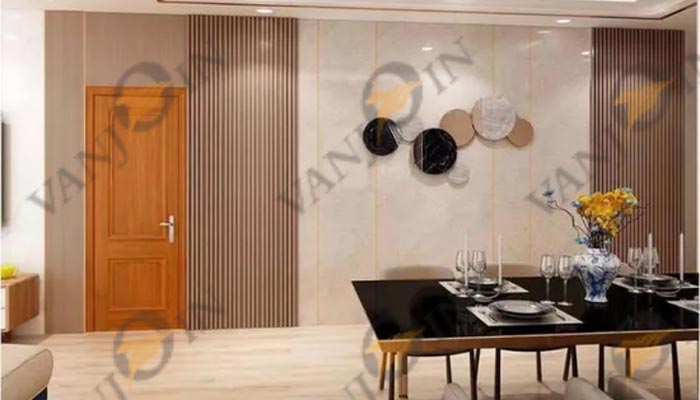
Ⅰ. Understanding the Materials
Before we dive into the performance metrics, it is essential to define exactly what these products are.
What is a Solid Wood Wall Panel?
Solid wood wall panel is a wall panel material used for interior decoration. It is made of solid wood, usually cut, processed and made from pieces of wood. These woods are usually from different types of trees, such as pine, oak, birch, walnut, etc., and can be selected according to decorative needs and personal taste.
Because they are 100% natural, no two panels are identical; every piece features unique grain patterns, knots, and color variations. These panels are often preferred by those seeking an authentic, high-end aesthetic that increases the intrinsic value of a property.
What is a WPC Wall Panel?
WPC wood plastic wall panel is a new ideal environmentally friendly building material choice. It is an engineered material created through a high-temperature extrusion process that blends recycled wood fibers (about 60%) with thermoplastics like HDPE or PVC (about 30%) and specialized additives.
The goal of WPC wall panels is to provide the “look and feel” of wood while utilizing the “durability and waterproofness” of plastic. It is a stable, high-performance alternative designed to withstand environments where natural wood might fail. Vanjoin Panel’s WPC wood plastic wall panels are easy to transport and install, saw, planed and drilled to present a variety of elegant designs and patterns.
Our WPC wood plastic wall panels can be used in commercial projects or residential use and are ideal for decorating or renovating building walls. As an alternative to traditional wooden boards. Wood-plastic wall panel combines the traditional look of wood with the durability of composite materials.
Ⅱ. Solid Wood: The Timeless Classic
Solid wood remains a favorite for high-end residential and traditional designs. Its appeal lies in its sensory experience—the warmth it adds to a room is difficult to replicate with synthetic materials.
The Advantages:
Unmatched Aesthetics: The organic texture and depth of natural wood grain provide a level of luxury and uniqueness that synthetic prints cannot perfectly match.
Property Value: High-quality solid wood installations are viewed as long-term assets, often increasing the resale value of a home.
Repairability: If the surface gets scratched or dented, it can be sanded down and refinished multiple times, potentially lasting for generations.
Natural Insulation: Wood is a natural thermal insulator, helping to keep rooms warmer in winter and cooler in summer.
The Disadvantages:
High Maintenance: It requires regular sealing, oiling, or varnishing to prevent it from drying out or losing its luster.
Vulnerability to Moisture: Natural wood is “breathable,” meaning it absorbs moisture. In humid environments, it is prone to swelling, warping, and even mold growth.
Susceptibility to Pests: Without proper treatment, solid wood remains a target for termites and wood-boring insects.
Higher Cost: Both the material and the professional labor required for installation are significantly more expensive than composite alternatives.
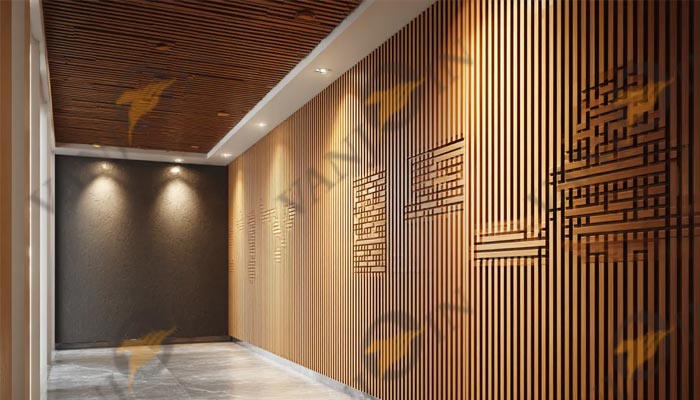
Ⅲ. WPC: The Modern Innovator
WPC has gained massive popularity in both commercial and residential sectors because it addresses the “pain points” of traditional wood. It is essentially a “maintenance-free” solution for the modern homeowner.
The Advantages:
Superior Moisture Resistance: Since it contains a plastic matrix, WPC is 100% waterproof. It will not rot, swell, or warp, making it perfect for bathrooms, kitchens, and basements.
Zero Maintenance: Unlike real wood, WPC wall panels never need to be painted, stained, or sealed. A simple wipe-down with a damp cloth is all that is required.
Eco-Friendly: Most WPC products are made from recycled wood waste and reclaimed plastics, reducing the demand for virgin timber and helping to divert plastic from landfills.
Ease of Installation: Many WPC panels feature a tongue-and-groove or interlocking system, allowing for much faster installation (and lower labor costs) compared to solid wood.
The Disadvantages:
Uniformity: While modern printing technology is excellent, the patterns can be repetitive compared to the random beauty of natural wood.
Difficult to Repair: Unlike wood, you cannot sand down a WPC panel if it is deeply gouged; usually, the entire panel must be replaced.
Heat Sensitivity: In extreme temperature fluctuations, low-quality WPC can experience slight expansion or contraction (though this is managed by professional installation gaps).
Ⅳ. Comparison of the differences between solid wood vs WPC wall panels
When decorating your interior walls, you may be faced with the decision between solid wood wall panel or WPC wall panel. Both types of decorative materials have their own characteristics, with different advantages and disadvantages. Before you make your decision, let’s delve into the differences between solid wood wall panel and WPC wall panel to help you better understand which material is best for your renovation project.
| Feature | Solid Wood Wall Panels | WPC Wall Panels |
| Material Origin | 100% Natural Timber | Wood Fiber + Recycled Plastic |
| Waterproofness | Low (Absorbs moisture) | High (100% Waterproof) |
| Pest Resistance | Low (Requires treatment) | High (Termite-proof) |
| Maintenance | High (Regular sealing/painting) | Minimal (Soap and water) |
| Installation | Complex (Requires expert carpentry) | Simple (Interlocking/DIY friendly) |
| Service Life | 50+ years (with heavy care) | 20-30 years (with zero care) |
| Eco-Impact | Natural, but impacts forests | Sustainable (Uses recycled content) |
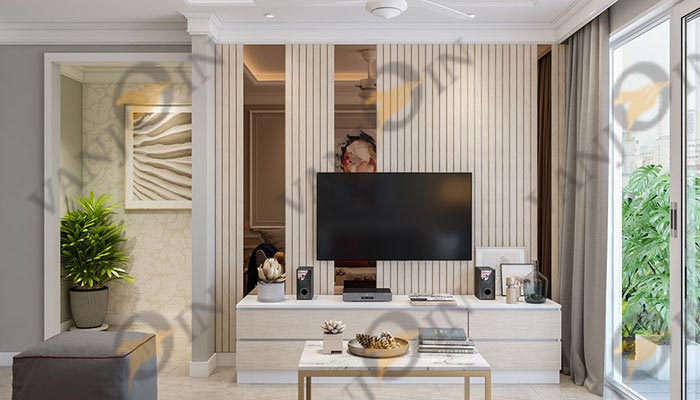
Ⅴ. Where Should You Install Each?
To maximize the lifespan of your investment, the material must match the environmental demands of the room. Here is a detailed breakdown of where each panel type excels:
High-Moisture Zones (Bathrooms, Kitchens, Basements)
The Winner: WPC Wall Panels
These areas experience frequent humidity spikes, direct water exposure, and potential condensation. Solid wood will inevitably absorb this moisture, leading to warping, cracking, and mold growth behind the panels. WPC’s thermoplastic core makes it completely waterproof. It acts as a reliable barrier against moisture and can be wiped clean effortlessly, making it the only logical choice for wet zones.
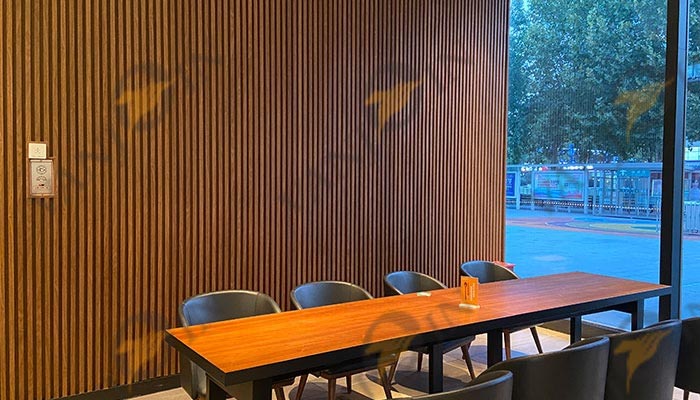
High-Traffic & Commercial Spaces (Hotel Lobbies, Restaurants, Hallways)
The Winner: WPC Wall Panels
Commercial environments and busy household corridors require materials that can withstand daily wear and tear, accidental impacts, and frequent cleaning protocols. WPC is highly resilient against physical abrasions. More importantly, it requires zero downtime for sanding or repainting, drastically reducing long-term operational costs for business owners.
Luxury & Relaxation Zones (Master Bedrooms, Living Rooms, Libraries)
The Winner: Solid Wood Wall Panels
In dry, climate-controlled environments where aesthetics and sensory comfort are the primary focus, solid wood is unmatched. Its natural texture, visual depth, and subtle organic scent create a high-end, inviting atmosphere. Wood also “breathes” naturally, which can help regulate indoor micro-climates and provide a warmer tactile feel compared to composite surfaces.
Executive Offices & Acoustic Spaces (Boardrooms, Home Theaters)
The Winner: Solid Wood Wall Panels
Beyond visual prestige, solid wood possesses natural acoustic dampening properties. It effectively absorbs sound waves and reduces echo, making it ideal for spaces requiring privacy and acoustic clarity. The unique, unrepeatable grain of natural timber also projects a sense of authority, tradition, and permanence that is highly valued in executive settings.
Ⅵ. Conclusion
Ultimately, the choice between solid wood and WPC wall panels depends on your lifestyle and budget. If you prioritize authenticity, tradition, and are willing to invest in regular maintenance, solid wood wall panel maliuy be a better choice for you. However, if you are looking for a beautiful, cost-effective, and moisture-proof solution that saves you time and labor, WPC wall panels are the smarter modern investment.
At Vanjoin Panel, we offer high-quality options for both categories. Whether you need the natural elegance of solid timber or the resilient versatility of WPC, our team is here to provide the samples and technical support you need to complete your project successfully.
FAQ
Which material is more cost-effective in the long run?
While solid wood has a higher initial purchase price and requires ongoing maintenance (sanding, staining, or sealing every few years), WPC requires almost zero maintenance. Over a 10-year lifespan, WPC wall panels are significantly more cost-effective due to the elimination of recurring labor and material upkeep costs.
Does WPC look exactly like real solid wood?
Modern WPC panels utilize advanced 3D extrusion and printing technology to closely mimic the texture and color of natural timber. However, because solid wood is organic, every single board has a unique, unrepeatable grain pattern. WPC panels may show slightly repeating patterns across a very large surface area.
Can I mix WPC and solid wood panels in the same project?
Yes. A highly efficient design strategy is to use premium solid wood in dry, focal areas (such as a living room feature wall or executive office) and visually matching WPC panels in adjacent wet or high-traffic zones (like bathrooms or corridors). This balances luxury aesthetics with practical performance.
Which panel type adds more resale value to a property?
Solid wood is universally recognized as a premium, luxury building material and typically adds higher intrinsic resale value to high-end residential properties. Conversely, WPC adds functional value, strongly appealing to modern buyers looking for durable, low-maintenance, and move-in-ready homes.
Are WPC wall panels safe for indoor air quality compared to natural wood?
Yes. High-quality WPC panels are eco-friendly and manufactured without harmful chemicals like formaldehyde, ensuring zero VOC (Volatile Organic Compound) emissions. While natural wood is inherently safe, the varnishes, stains, and glues used during its installation and maintenance must be carefully selected to avoid introducing indoor air pollutants.
+86(0)27 82801003


Add:Floor 14, Golden Block, Poly Champagne International Building, Hanxi No.1 Road, Qiaokou District, Wuhan City, Hubei Province, 430034 China

Got a question, comment or business enquiry? We are always happy to hear from you.